
A Q&A with Carly Fiorina President and CEO of the Colonial Williamsburg Foundation and the upcoming July 4th 250th Celebration
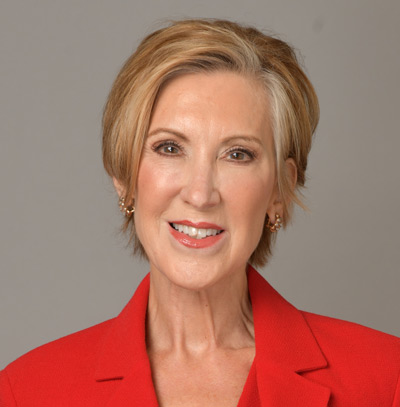
A Q&A with Carly Fiorina
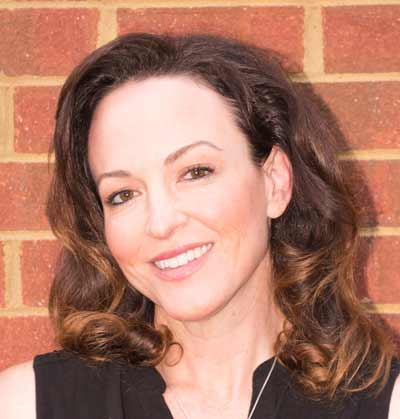
Carly Fiorina currently serves as both the President and CEO of the Colonial Williamsburg Foundation, and as the National Honorary Chair of the Virginia 250 Commission, we jumped on a call with her to discuss the 250th Celebration and leading the largest American History Museum in the world.
Olivia Bada: Many people know you from your corporate and political leadership, but what is your personal history with Williamsburg?
Carly Fiorina: Well, I got involved with Colonial Williamsburg officially in 2017, when Justice Kennedy, who was a long-serving board member, called me and asked me to consider coming to the Board. Another colleague on the Board, Hank Wolf who’s, of course, a local and beloved Williamsburg resident was the Chairman at the time. After joining the Board in 2017, I became Chair of the Board of Trustees in 2020. So, I have been Chair of the Board for a little over five years when I recently assumed the Chief Executive Role. I’ve been involved with Williamsburg now for almost 10 years. And although in a different capacity than my current role, it has been an absolute privilege and joy from the very first meeting I had. This is an amazing and remarkable place.
Olivia Bada: Do you remember your very first visit to the Historic Area, and what was it that captured your imagination?
Carly Fiorina: It was not my first, but I will tell you, the first time I walked down Duke of Gloucester Street, once I had come back to Williamsburg as a Trustee….you know, I was just overwhelmed by it. It’s so easy to walk down Duke of Gloucester and just say, “Oh, this is a pleasant street and a pleasant community,” and it is. That’s part of its charm. But, of course, as you walk down that street, and you look forward to the Capitol and you look across to the Raleigh Tavern and you remember it’s an amazing place where literally a nation was forged. It’s awe inspiring, honestly.
Olivia Bada: Yes, it is. I think a lot of people don’t often think about the magnitude of what happened in Williamsburg, on these actual streets and in these buildings. Having the 250th Celebration here is a great chance to remind everyone about the importance of Williamsburg in our Nation’s founding.
Carly Fiorina: Yes, a nation was forged on those streets quite literally. The United States of America was made in Virginia. That is a factual statement, that without Virginia, there is no United States of America. Williamsburg was the crucible of Virginia. And so, without Williamsburg and that street in particular the United States of America doesn’t happen.
Olivia Bada: Or it happens in a very different way.
Carly Fiorina: Yes, it doesn’t happen with those people, in those connections.
Olivia Bada: When you have a moment of downtime or when you are showing friends around the Historic Area today, what are your absolute favorite things to do or places to visit in Williamsburg?
Carly Fiorina: Well, I love the Taverns. I have to say, I think they are so fun and delicious! They are wonderful whether you’re with family or hosting a business event. We had a bunch of Google executives here yesterday in the King’s Arms Tavern and you know, they were just blown away. I’ve had my family there many times. I just loved the taverns.
My favorite things to do in Williamsburg are either to observe people experiencing it or to be somewhere by myself, where I can reflect on it. I love to stand back and observe when people are interacting with a tradesperson or listening to a Nation Builder or seeing one of our Street Theater Productions. I love to watch them because you know when people are enjoying something and learning at the same time, they have a particular look, leaning into whatever’s going on. And I just love to observe that.
And then, I like to go places where I can reflect, so I love the Compton Oak. Obviously, I love walking the back streets where there are less people, and, you can contemplate and reflect on all the things that happened and all the things that are happening now, and our role in keeping all that alive for people.
Olivia Bada: In a digital, fast-paced world, how do you see the role of living history museums like Colonial Williamsburg? How do we keep physical, historical spaces exciting for a generation raised on screens?
Carly Fiorina: So, I have to tell you a story from yesterday to answer that question. As I mentioned, we had an event here with Google executives, and we had them here because we were unveiling the efforts of a two and a half year collaboration. And if you go on Google Arts and Culture, you will see the results of this collaboration. Actually, your website would love to point your readers there, because what we did with Google is we used the tools of technology to bring to life digitally 60 stories of the events and the people who lived here. We have 3D online visuals of historically accurate representations of our famous buildings, including the Palace, and the Capital.
You can interact with AI tools, and when asking questions, you will receive historically accurate, curated answers. In other words, Google provided the technology and the tools, and CW provided the curation, the authenticity, and the research. It’s this amazing collaboration.
I recommend it to you and your readers, (here is the link) however at that event yesterday with Google, the executive in charge of this project said, and I’m quoting him virtually verbatim, “You know? I’ve never said this, at an event like this, anywhere in the world, until now; as great as this digitally curated collection represents Williamsburg, you really have to come here.”
Now that was a technology guy and the reason he said that was because this is a living museum, not just buildings and things. It’s a living museum of people who engage with you, people who talk to you about what they’re doing while they are working. For example, these executives engaged with the silversmith who explained what she was doing, as she worked on the silver mace that we will present in October to the General Assembly. The Assembly is coming here to our capital for the 250th anniversary of the first independent government in the newly independent nation, which was, of course, Virginia. The executives were able to interact with Thomas Jefferson, which they did, with Gowan Pamphlet and with Martha Washington.
That human connection, it’s not just reading about history, it’s not just seeing history, it’s about interacting with history on a human level.
The group went into our new Campbell Archaeology Center and they interacted and talked with our archaeologists. Here’s an interesting fact you may never have told your readers. There are three huge archaeological sites in the world: first in the world is Rome, then Pompeii and the next largest one is Williamsburg, Virginia.
We have 60 million artifacts that we have dug out of the ground, and we are digging out others every single day. We recently discovered, while building the Greater Williamsburg Sports Complex, a Revolutionary barrack that housed hundreds of horses and thousands of Revolutionary soldiers. And we discovered a Revolutionary cemetery. There was the discovery of the Bray School just several years ago. Our discoveries go back even further because native people have been living here for thousands of years; discovery is waiting everywhere, under our feet in Colonial Williamsburg.
Now all the way back to your original question, of course, we have to use the tools of technology because not everybody can come here and because not everybody knows about us, and so we have to send ourselves into the world. Coming here is an absolutely unique event because you get to interact with the people who are here doing the curation and the discovery. And no matter how much technology there is, human beings crave human connection. And so this is the place where you can connect with human beings from the past and their lives in a uniquely human way.
OB: We are just coming up on America’s 250th anniversary. As the head of Colonial Williamsburg, what is your primary overarching goal for the foundation during this landmark celebration? And what does success look like to you?
CF: I think there are two goals.The first is to provide a commemoration and a celebration worthy of our Nation, and to remind us of who we are and where we come from.
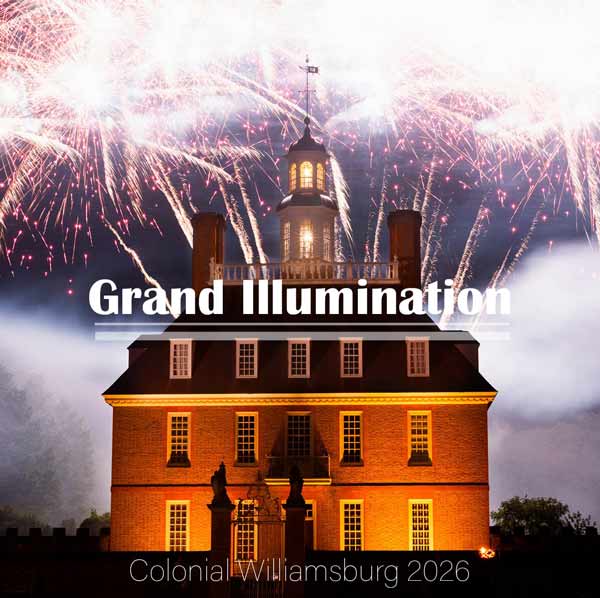
We will have an amazing fireworks display, the largest ever in our history. We will have an amazing drone show. We will have amazing entertainment. But in the end, the 250th should be a time of reflection and remembrance and rededication of ourselves to the founding principles of this Nation. It is why we hope to welcome tens upon tens of thousands of people here to experience it live.
It is also why we are so proud that the 4th of July show from 8 pm to 10 pm will be broadcast live nationally on PBS. And then repeated again nationally on PBS from 10 pm – 12 pm. The entire show will repeat again on July 5th and we hope over and over and over again.
That’s the first goal, the second goal, which is equally important, is for more people to understand who we are, what we do, so that they will want to come here to Colonial Williamsburg.
This celebration is several days of events. Our events start July 2nd and they go through the evening of July 4th. Let’s just speak of the national broadcast that will be live from the stage here. No one else in America will have a show like ours. But frankly, no one else in America could produce a show like this.
Olivia Bada: So, talking a little bit about the show, from my understanding, it’s going to be behind the Courthouse and there will be fireworks and drones along with great entertainment. (Show Line Up)
Carly Fiorina: That is correct, and wherever people are in the historic area, they will see the fireworks and the drones. And we will have screens throughout the historic area, so if you’re not seated right in front of the stage or near the stage, if you’re, for example, is you are on Palace Green, where we’re going to have an awesome pre-show, you can still watch the show at the Courthouse that will be projected on large screens. (See events for July 4th in Colonial Williamsburg)
Olivia Bada: You’ve managed massive corporate mergers and complex national campaigns. How does planning and executing a large cultural milestone like the VA250 celebration compare to the high-stakes corporate strategies you’ve run in the past?
Carly Fiorina: You know, I’ll tell you the context is very different and the goals are different. A corporation is focused on profitability, competitive positioning, and sustainability. And a national commemoration is focused on very different metrics for success. But what’s the same is you have to align all kinds of people, with all kinds of points of view, around a common purpose. Anytime you’re tackling something very complex and very important, you need people’s best efforts. And the only way you get best efforts is to have a worthy purpose, common goals, and alignment. Keep people moving in the same direction, despite distraction, of which there has been a lot, and despite disagreements of which there always are some. But you need to keep people moving in the same direction. That’s the same in the corporate world or in planning this event, because people are the same: they won’t give their best efforts to something they think is less than worthy of them.
The second thing that’s the same is you cannot make progress unless you measure where you’ve been, and you’re clear about where you’re going. It sounds pretty basic, but it’s just true, and so it’s why your questions about what is the goal and how do you measure success, are really important questions. You have to be able to track progress to know, are we getting there? Are we doing the right things that will ensure success?
Of course, you have to have a lot of contingency planning. You have to think about risks. You have to be able to deal with it when things go wrong, and things are always going to go wrong, because hey, life isn’t perfect, and people aren’t perfect, and we make mistakes. And so, then you have to be able to keep going, solve the problem, not get thrown off of your worthy purpose and shared goals. Because goals were right, and they’re still right, if you have a setback, a failure or a mistake you just need to regroup.
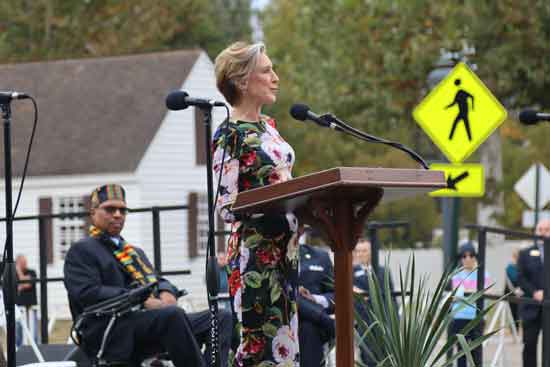
And so all those things are the same in leadership, the principles that are required to achieve results in big, complicated undertakings require managing and directing the best of everyone’s efforts.
OB: What would you see as a marker of success from this week’s programs?
CF: So, first, I would measure that people are still talking about it. People remember it. People are uplifted by it. In the end, our goals are to educate people, and to engage with every community so that every community understands that they are part of our shared story. They are part of our history. They are part of who we are.
And finally, to inspire a season of civic renewal. We, as citizens, have a duty to help form a more perfect union. It’s not just a privilege, it’s a duty. That’s how our Nation was forged and it is how this Nation has lasted 250 years. It’s how we’ve remained a Nation, despite all our faults; we are a Nation where our union has made more things possible for more people.
OB: As you look at the operations, reach, or digital presence of Colonial Williamsburg, what are the specific areas you are most eager to focus on during your tenure?
CF: Well, we are in a season of growth. We had a period where we had to really fundamentally transform our financial situation. There was a period when I first came on the Board where the Foundation was not in the best financial shape, and so we had to go through a season of stabilizing and transforming our financial situation.
We have done that, we now have earned an A+ credit rating from Standard & Poor’s, which is no easy thing to get. And so now we are poised to really grow. And when I say grow, we want to grow visitors. We want to grow our reputation. More people need to know about us. Yes, we need to grow our digital presence because it helps us reach more people. We want to invite more donors to invest in us. We are totally funded by private donations. We don’t get any Federal money. And so the more people that know us and appreciate what we do here, the more they are prepared to invest their own time and treasure.
So for us right now, it is not about changing things that we do because we do things really quite well, it is about growing the things we do. And that is a question of prioritizing. Where do we put the most emphasis on growth?
I mentioned our Archaeology Center just opened three short months ago. We are growing our archaeology programs. We’re starting to bring high school and college students in to learn the science and the art of archaeology. We need to grow our Teachers’ Institute. We bring in hundreds and hundreds of teachers for week-long, immersive training in how to make American history engaging for young people. We need to grow that program. We need to grow the number of people in the historic area, meaning our people. We need to hire more people for the historic area so that more of our guests can interact and have that human connection with a person, who can explain to them where they are, show them the Capitol, for instance where so much happened, from the perspective of a person of that time period. So, those are some areas where we really want to grow our programs and our impact.
OB: My last question is actually from my teenage daughter, who after learning about your background as a trailblazer for women in the corporate world, in politics and now as CEO of the largest U.S. history museum in the world, asked what made you not give up after setbacks in life?
CF: Setbacks are part of life and I have always learned a lot from them. We all learn a lot when things are hard. In fact, the longer I’ve lived, the more I realize that we learn the most when things are hard, not when they’re easy. And so I tend to think one of my greatest skills is problem solving. I learned problem solving skills because things didn’t always go perfectly, and so, I wouldn’t trade a single one of those setbacks.
OB: As we move toward the celebration of the 250 Anniversary of our great Nation, we have had many accomplishments to cheer, as well as setbacks to reflect on in our shared history. We have always moved forward, with worthy goals such as equality and freedom. We recognize that it has been harder to reach these goals for some of us, but we move forward and work together, as a Nation to ensure such rights for us all.
Where will we be in 250 years as a Nation? Will we be even further along our path towards achieving our shared goals and worthy purposes, or will we have fulfilled them by then, for every American? One thing we hope is that the 500th Anniversary (as well as many leading up to it) find their home in Williamsburg again, as the true spot to celebrate the birth of our Nation.
Thank you to our new President and CEO of the Colonial Williamsburg Foundation Carly Fiorina for spending time with us and answering our questions. We look forward to seeing her on DoG Street, at a Colonial Williamsburg Evening Program, in a Tavern or maybe on a morning walk on the Basset Trace Trail.
Author