







What Visitors Should Know About Colonial Williamsburg’s Bowling Green Project
An inside look at Colonial Williamsburg, the Garden Club of Virginia, and Nelson Byrd Woltz’s Bowling Green Restoration Project
What Is the Bowling Green?
The Bowling Green is a lawn-like space next to the Governor’s Palace, used for exactly what it’s name suggests.

A Behind-the-Scenes Look at the Restoration Project
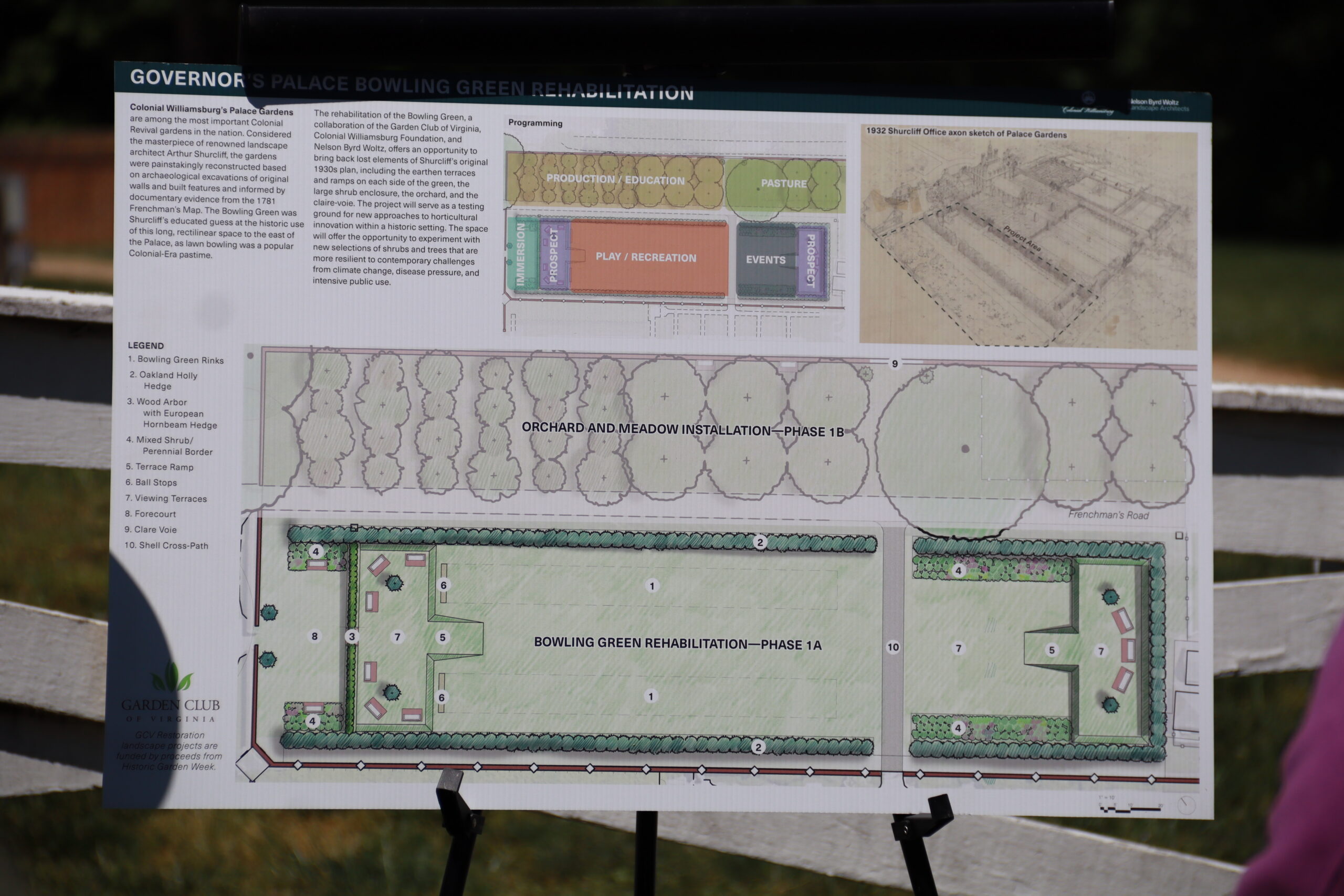
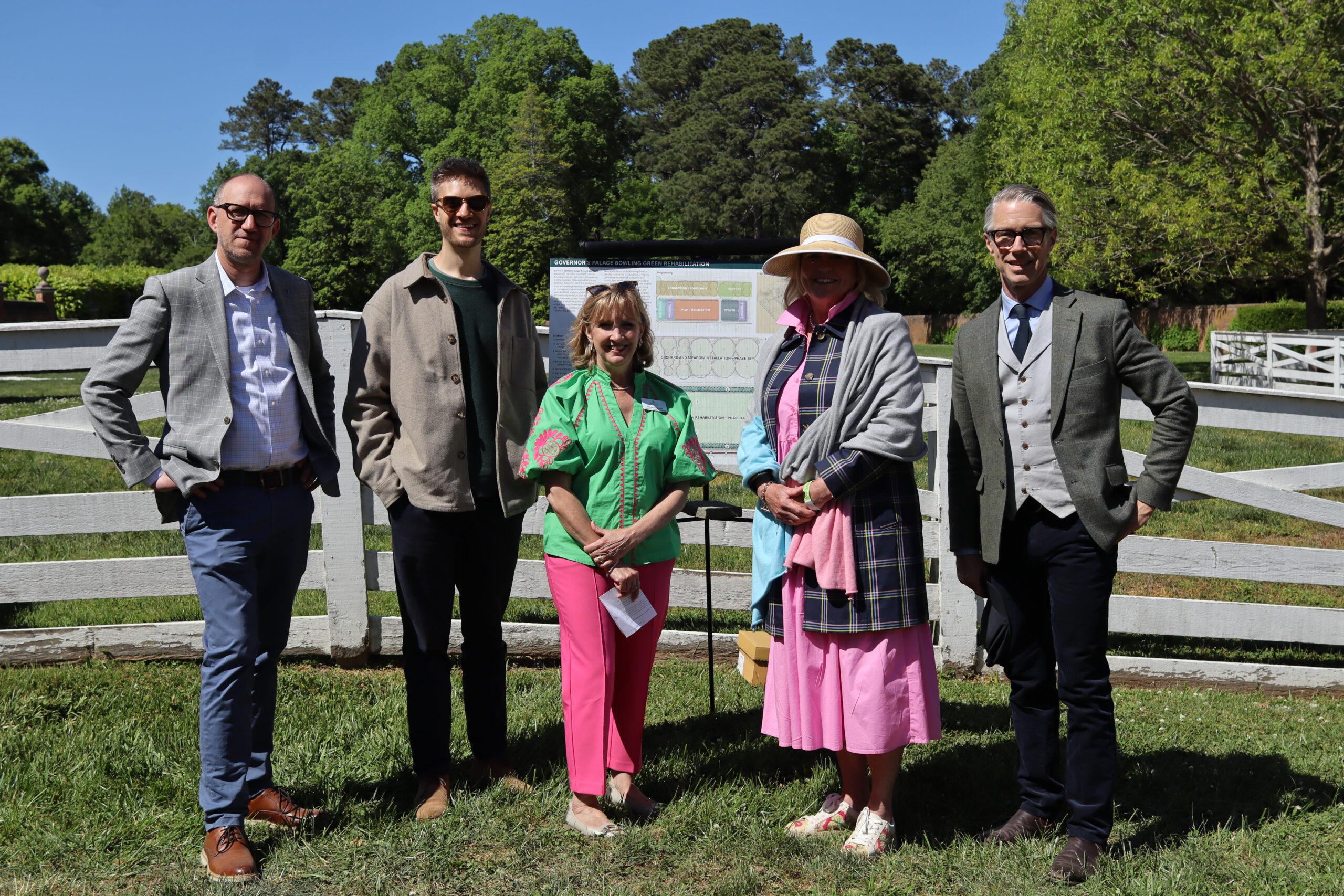
Visitors strolling past the Bowling Green at Colonial Williamsburg may soon notice some changes taking shape as it undergoes significant restoration. This project is part of a comprehensive master landscape plan to care for and restore Colonial Williamsburg’s landscapes while keeping them welcoming and usable for modern guests. This plan was developed in 1929 by renowned landscape architect Arthur Shurcliff. It is also the first partnership between Colonial Williamsburg and the Garden Club of Virginia, an organization that has supported historic landscape restoration across the state for nearly a century.
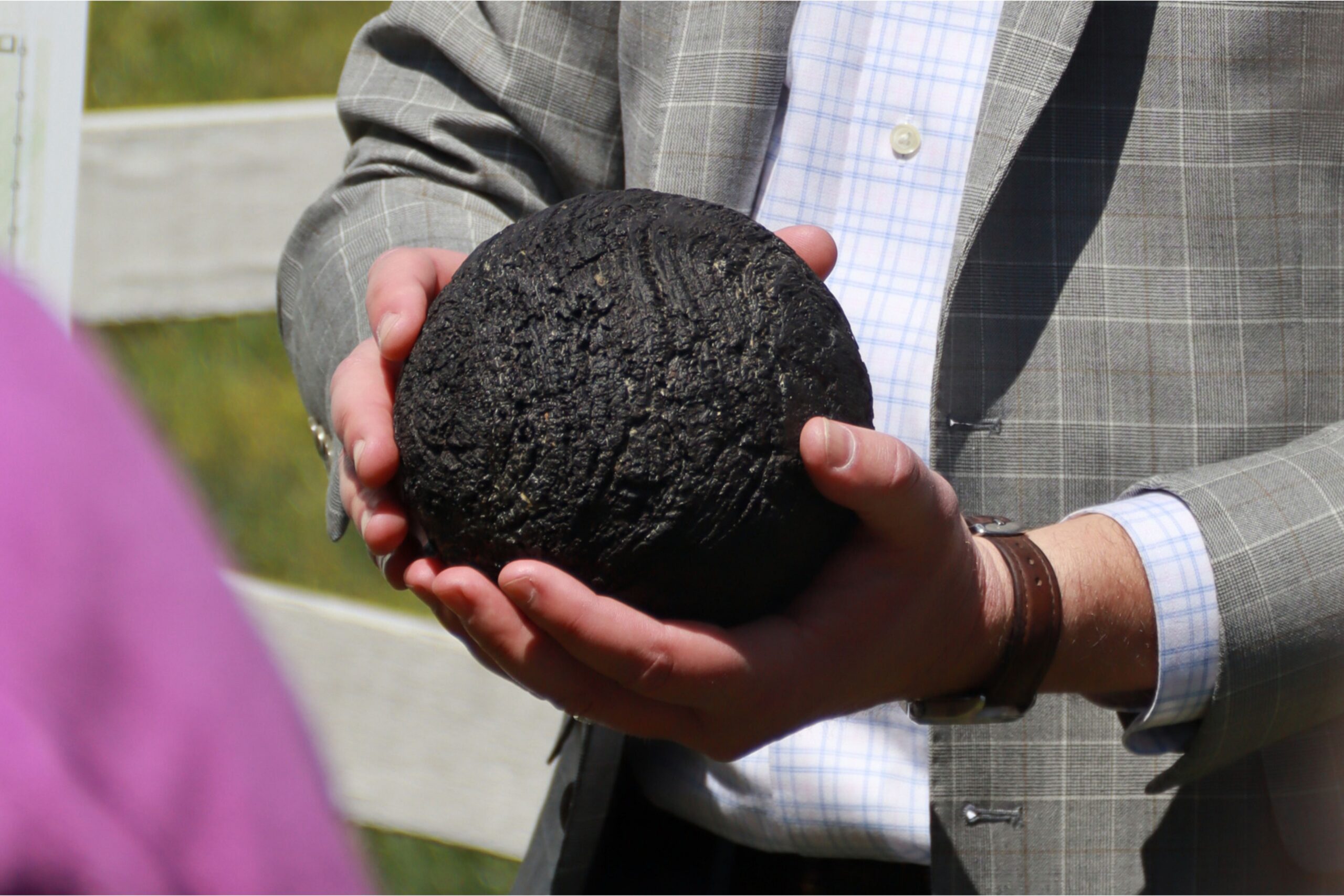
According to Thomas Woltz of Nelson Byrd Woltz, the company contracted to do the landscape work, one of the challenges is balancing historical accuracy with 21st-century realities. While the goal is to honor the site’s 18th-century roots, not everything from the past can be recreated exactly as it once was. He emphasized that adaptation, not replication, is the goal. Some plants that thrived decades ago simply would not survive in today’s climate. Instead, plants like Oakland hollies and American boxwoods were selected to best reflect the historic look while remaining sustainable for future maintenance.
What Visitors Can Expect During the Work
Work on the project is expected to begin in late May, when crews will start reshaping the ground and preparing the lawn. Deneen Brannock, chairman of the Restoration Committee of the Garden Club of Virginia, said they had hoped to have part of the garden done by July 4th, but they missed the planting window. By late fall, visitors can expect to see a refreshed green space designed for both everyday enjoyment and special events. During construction, the space will be cordoned off for safety, but visitors will be able to see the work being done. Additional proposed projects are adding more shaded walking routes and reimagining underused spaces, like the employee lot near the Finnie House, to better reflect the site’s historic character.
After completion, the Bowling Green will be usable once again as a bowling green, as well as serving as a venue for brief events, so as not to kill the lawn. Once completed, the Bowling Green will be available as part of Colonial Williamsburg admission.
Author